An Energia Plus specialist spoke about the prospects for the development of AGEK for hard-to-reach isolated areas
Moscow, October 22. The largest industry exhibition Heat&Power 2024 took place at the Expocentre International Exhibition Complex. The event annually brings together Russian and foreign manufacturers and suppliers. The Energy Plus company has repeatedly taken part in the main industry event.
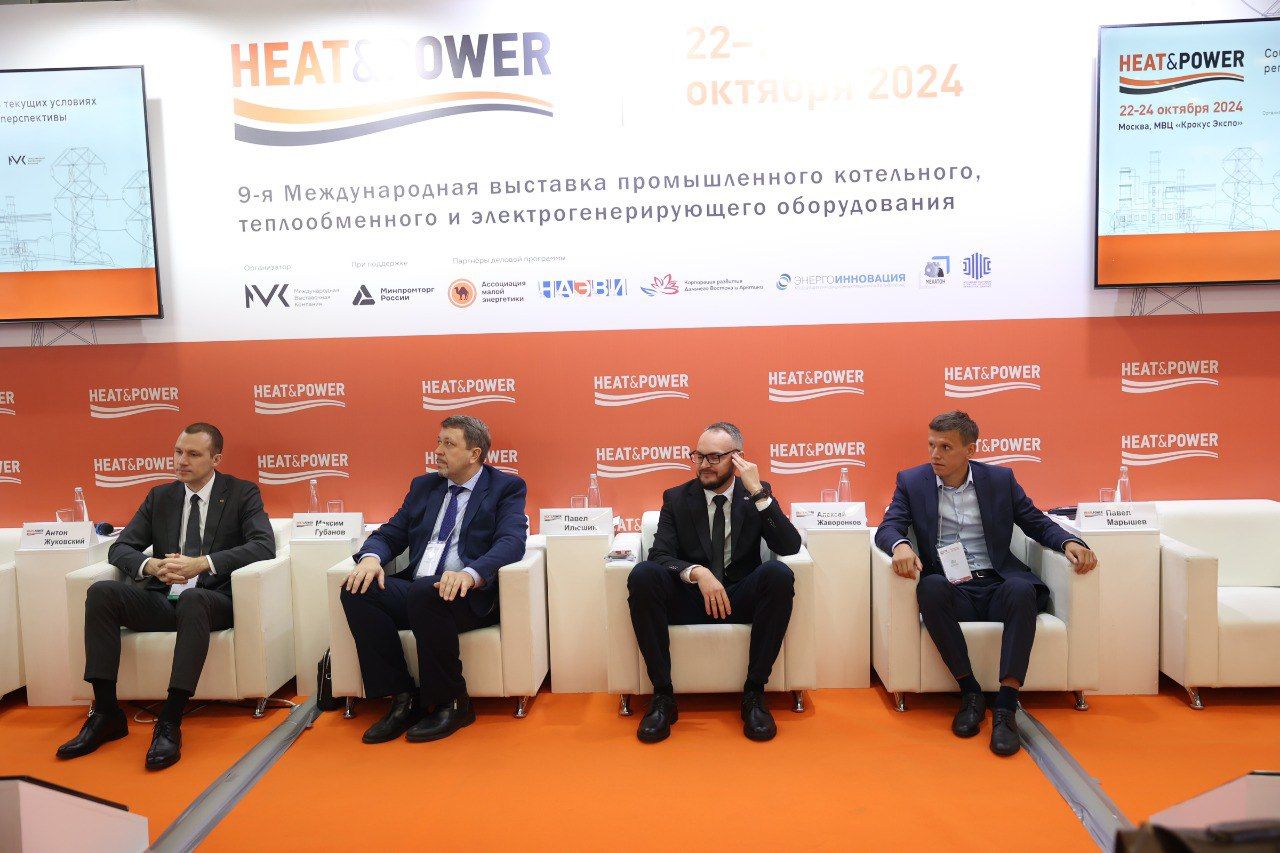
With the support of the Small Energy Association, the conference “Own Energy in the Current Regulatory Conditions: Challenges and Prospects” was held as part of the exhibition. The panel discussion was attended by key industry participants, experts, management staff of the largest engineering companies, manufacturers of energy and boiler equipment.
A representative of Energy Plus made a presentation on the topic “Automated hybrid energy systems in the context of increasing the energy sustainability of hard-to-reach isolated areas.”
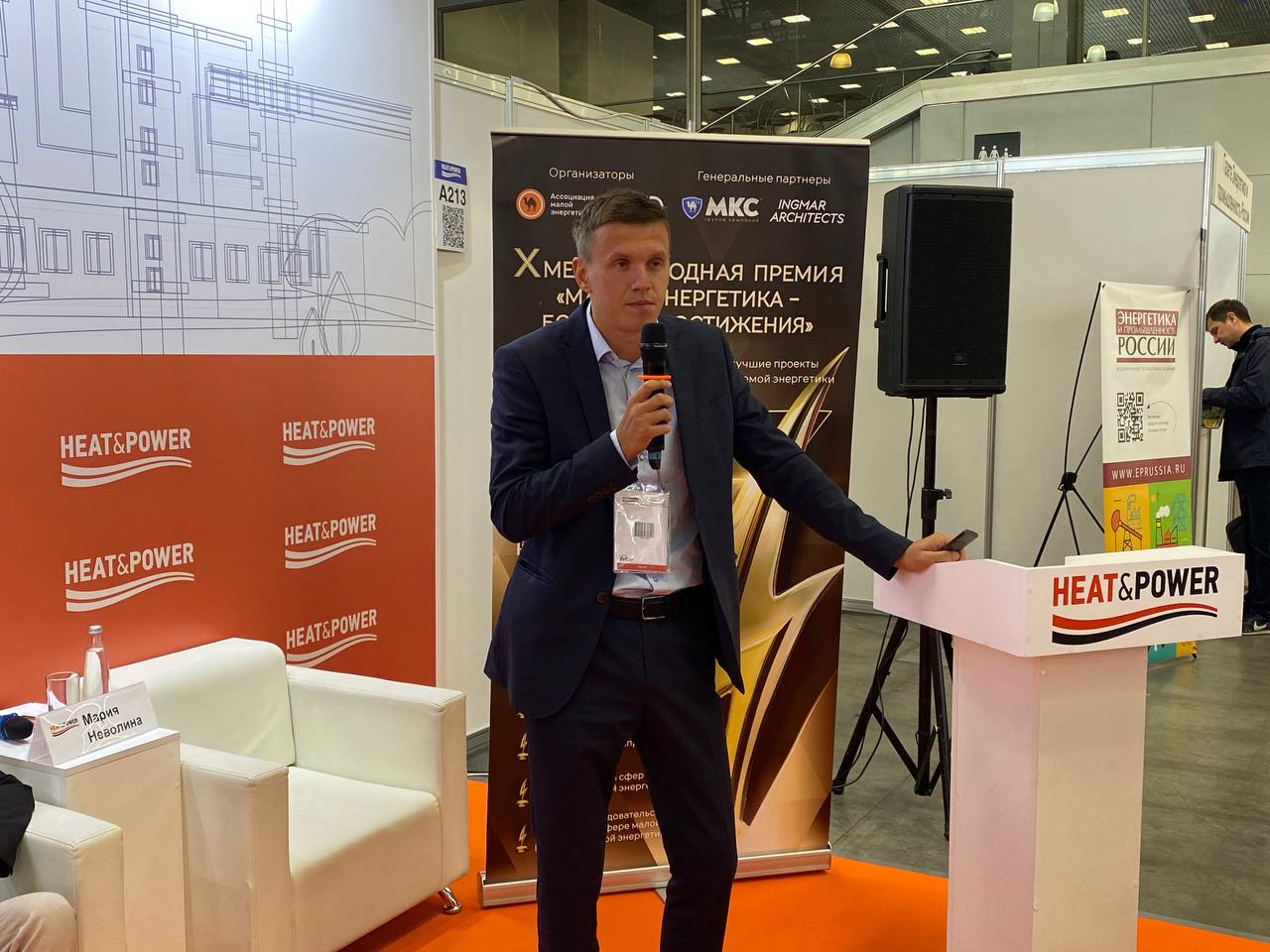
Pavel Maryshev appreciated the economic and environmental importance of isolated, hard-to-reach territories of the Russian Federation.
"Isolated hard-to-reach territories (ITT) make up about 65% of the territory of Russia. The largest deposits of minerals, in particular oil and gas, are located here. The energy supply of ITT is undergoing noticeable metamorphoses: there is a transition from the classic model of “DPP + boiler house on diesel fuel” to the fundamentally new system “AGEK”,” he said.
The speaker noted the current problems of isolated energy hubs: high wear and tear of fixed production assets (about 60%), lack of fuel competition, low energy efficiency of production and consumption. Only in 10% of cases, ITT energy supply systems involve the use of combined heat and power production - this is a problem area, which is also a potential growth point for small island generation. The cost of energy produced for ITT does not allow the formation of tariffs acceptable to subscribers.
One of the most important tasks on the way to strengthening the energy sustainability of isolated territories, according to the speaker, is the creation of a sufficient internal rate of return (IRR).
*“An alternative to the classic “diesel” approach is the creation of automated hybrid energy complexes at IIT. This architecture of the energy system allows for efficient fuel substitution, thereby reducing the cost of energy produced by 30-35%. And the marginality of the corresponding investment projects increases to 20-30%, which is a completely normal indicator, based on which large capital can come into the industry. With high potential for the development of renewable energy sources (for example, on Sakhalin), the investment cycle can be shortened to 3-4 years, and the rate of return can increase to 50%; in less renewable energy-promising areas (for example, in Yakutia), the indicators will be 6-8 years with a profit rate of about 30%,” the speaker emphasized.
In 2020, Energy Plus carried out a feasibility study for the construction of AGEK for a number of hard-to-reach isolated territories (uluses) of the Sakha Republic. It was proposed to use LNG or CNG as the main fuel for the GPU. Fundamental design solutions were agreed upon, but due to lack of funds from the customer, the project was frozen. Now RusHydro, one of the largest generating companies, has announced an investment program according to which 270 diesel power plants in the Far East and the Sakha Republic will be modernized using the AGEK model. The amount of the investment program will be about 75 billion rubles.
Modernization of the energy infrastructure of IIT occurs in conditions of limited transport accessibility, so block-modular solutions in this case are a real panacea. For example, our engineering company Energia Plus carries out design solutions for the integration of AGEK, while producing container boiler houses that can be part of AGEK, and in the future plans to launch the production of modular gas piston power plants, which are characterized by high factory readiness of modules and ease of installation “on site”.
“The introduction of AGEK makes it possible to obtain a high return on investment even in regions where climate inputs do not contribute to the active development of alternative energy”, noted Pavel Maryshev.
Based on the panel discussion, the experts formed a package of proposals, which was approved by the participants. A corresponding letter has been sent to the regulator.