Subtleties of the technical prize: “Energy Plus” at the St. Petersburg Gas Forum 2025
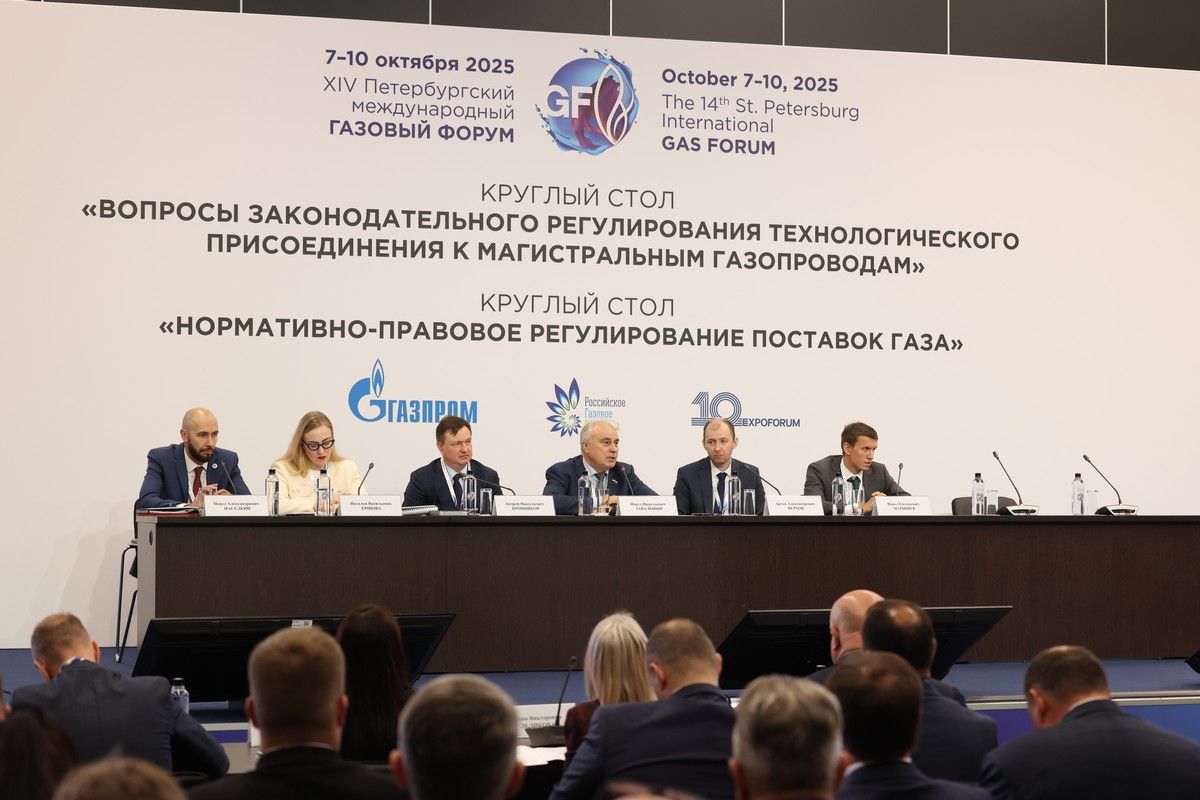
From October 7 to 10, one of the most important industry forums, the XIV St. Petersburg International Gas Forum (SPIGF), took place at the Expocentre site in St. Petersburg. Energy Plus delegated a team to participate in the business program of the forum.
The forum brought together representatives of the regulator - the relevant Ministry and the State Duma; management team of industrial gas subscribers, the strongest engineers of large companies participating in the gas industry; specialized non-profit organizations; representatives of the scientific community, students. As part of the business program of the forum, a round table was held on the topic “Issues of legislative regulation of technological connection to main gas pipelines.” The event was attended by specialists and experts from the largest market participants: PJSC Gazprom, Russian Gas Society, JSC Russian Railways, RAO UES of Russia, etc.
Presentations were made by: Director of the Department for Development of the Gas Industry of the Ministry of Energy of Russia Artem Verkhov, First Deputy Chairman of the State Duma Committee on Energy Pavel Zavalny, Development Director of Energy Plus LLC Pavel Maryshev, Head of the Department of PJSC Gazprom Pavel Nasedkin and Deputy Head of the Department of JSC Russian Railways Natalya Ershova.
The discussion was conducted, first of all, around the imperfection of the regulatory framework for technological connection to main gas networks. Among them are issues of establishing the technical feasibility and actual deadlines for the execution of a technological connection agreement, calculating the initial and final costs of design and installation work for connecting to the main gas pipeline, an algorithm for determining compensation for the costs of the owner of the Russian UGSS for technological connection, mechanisms and criteria for refusing technological connection.
The approach to the algorithm for determining the composition of costs and conducting an actual assessment of the costs of executing a technological connection agreement and their compliance with the requirements of legal regulations regarding state regulation of prices (tariffs) in the gas supply sector remains controversial. Costing needs to be more transparent: then the main customers of the service will have the opportunity to build working economic models, which will become the basis for including technical prizes in the priority tasks of investment budgets. A situation of mutual benefit: mining companies receive a reliable subscriber “on a long-term basis,” the UGSS balance holder receives long-term gas supply contracts, subscribers receive a reliable source of energy necessary for sustainable production development.
“The process of adjusting the system for connecting large industrial consumers of natural gas to main gas pipelines is an obvious “growth point” for domestic consumption. Against the backdrop of a decline in export flows, it is industrialists who can become a springboard for the sale of additional volumes of energy resources. However, the existing practice is still far from perfect: it is necessary to improve the fuel and energy balance mechanism, create a transparent calculation of the contractor’s costs, coordinate with the participants in the process and formalize the concept of “technical possibility of technological connection”. The process of improving legal regulations takes place in the context of multilateral communication, but there is no articulated position of the consumer - large manufacturing enterprises, which are the target audience. To build an organic connection system, the opinion of one side is not enough - more active participation is required on the part of the recipients of raw materials,” noted Pavel Maryshev
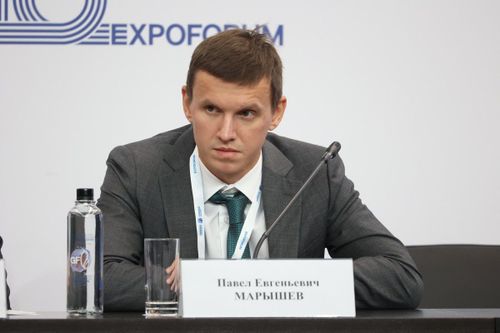
The speech of the delegate from Energy Plus was built around a non-obvious, but extremely important topic - the process of developing and approving territory planning documentation (DPT) in the Ministry of Energy of the Russian Federation. In particular, the norms outlined in the Town Planning Code of the Russian Federation, the Land Code of the Russian Federation, and Codes of Practice are not fully taken into account at the pre-design stage. Thus, the right of way developed by cadastral engineers may not meet the requirements of the technical conditions and restrictions in force at the construction site of the projected gas pipeline.
There is a possibility that during the development and approval of working documentation, the work site will end up outside the right of way agreed upon by the DPT with the Ministry of Energy. There is a need for re-approval.
“This kind of algorithm, in some places, leads to a significant increase in the cost of the project, a shift in implementation deadlines to the right, and creates space for conflicts to arise between participants in the investment project. The issue of re-coordination of DPT is especially acute in cases where stage “P” and stage “P” are performed by different companies. Today this is becoming the rule, since the working documentation is handed over to the winner of the construction tender. From this moment, changes begin that optimize the cost of construction, but correspond in a complex way with the approved stage “P,” the speaker added
For further discussion, the Energy Plus delegate proposed options for optimizing the interaction process within the project. In particular, it is proposed to differentiate the requirements for the composition of the DPT depending on the length and status of the linear object; develop and implement regulations for interaction between participants in design and construction at all stages of project implementation; include in the terms of the contract the contractor’s obligation to agree on any changes with the developers of stage “P”; use digital tools (for example, BIM or specialized platforms) to transparently track changes and their approvals.